What unionization signals to players

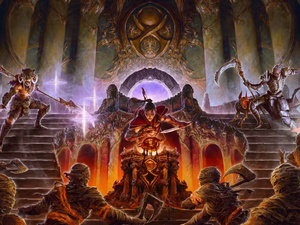
Labor organization in North American game development has moved from rarity to drumbeat, and Blizzard now faces one of its most structurally significant chapters: more than 450 members of Team 3, the Diablo franchise’s core development contingent, have collectively unionized under the CWA banner. Previous union efforts at the company concentrated on narrower verticals—quality assurance clusters, for instance—highlighting acute precarity in roles historically vulnerable to cyclical layoffs. A wall‑to‑wall unit of this scale signals a strategic expansion: embedding collective bargaining not at the periphery but inside a flagship RPG pipeline.
Why now? Macro and micro dynamics converge. Industry‑wide, consolidation waves and high‑profile layoffs have destabilized assumptions about career continuity, even inside marquee franchises. Developer communities track these events in real time; each studio contraction becomes a cautionary tale converting latent concern into organizing momentum. Internally, the Diablo production cadence—live seasonal content layered over long‑tail systemic balancing—demands sustainable workload orchestration. Crunch narratives from past eras have recalibrated tolerance for opacity around scheduling and resource allocation. Formal union structures promise leverage to negotiate on predictable pain points: workload distribution, role progression clarity, compensation bands aligned with market volatility, protections during post‑launch optimization sprints.
For players, governance shifts behind the screen can feel abstract until they manifest in cadence or quality fluctuations. Yet the argument organizers advance is pragmatic: stable, empowered teams generate fewer attrition churn cycles, preserving institutional memory vital to balancing interconnected loot economies. Diablo’s core loops (drop rates, affix diversity, endgame density) depend on designers and engineers iterating with historical context. High turnover injects risk of regression bugs or design oscillation that frustrates communities investing hundreds of hours into build crafting. Bargaining frameworks that reduce burnout theoretically align with player interests by safeguarding iteration continuity.
Management response vectors will shape immediate next steps. Recognition decisions, negotiation timetables, and public messaging calibrate tone. Adversarial stances can galvanize solidarity; collaborative framing may expedite contract scaffolding. Broader industry observers will parse whether a large multi‑disciplinary unit can secure language on AI augmentation boundaries, remote work flexibility, and transparent performance evaluation—areas rapidly becoming flashpoints across tech‑adjacent sectors.
Union scale also reframes mentorship pipelines. Junior designers entering a collectively bargained environment encounter codified expectations rather than informal whisper networks about promotion criteria. That can diversify retention beyond those already adept at self‑advocacy. Critics sometimes warn of bureaucratic drag; counterpoints emphasize that clear procedural channels can accelerate conflict resolution by replacing ad hoc escalations with negotiated pathways.
There are external brand ramifications. For a publisher navigating public perception after years of scrutiny over workplace culture, a significant union could either amplify narrative pressure or open a new collaborative chapter. If Blizzard leans into partnership—highlighting shared goals of product excellence and sustainable creativity—it may convert potential friction into reputational rehabilitation.
Nothing about collective bargaining guarantees creative utopia. Contract negotiations can stall; economic headwinds can constrain wage asks; design disagreements do not vanish. Yet formally organized labor introduces structured feedback loops, reducing reliance on attritional resistance to surface systemic issues. For the Diablo ecosystem, the unionization of Team 3 represents a structural bet: that codified worker agency and the pursuit of enduring action RPG excellence are complementary, not competing, priorities. The next seasons will test that thesis in the cadence of patches, the polish of expansions, and the stability of the human engine driving Sanctuary’s evolving darkness.
Why now? Macro and micro dynamics converge. Industry‑wide, consolidation waves and high‑profile layoffs have destabilized assumptions about career continuity, even inside marquee franchises. Developer communities track these events in real time; each studio contraction becomes a cautionary tale converting latent concern into organizing momentum. Internally, the Diablo production cadence—live seasonal content layered over long‑tail systemic balancing—demands sustainable workload orchestration. Crunch narratives from past eras have recalibrated tolerance for opacity around scheduling and resource allocation. Formal union structures promise leverage to negotiate on predictable pain points: workload distribution, role progression clarity, compensation bands aligned with market volatility, protections during post‑launch optimization sprints.
For players, governance shifts behind the screen can feel abstract until they manifest in cadence or quality fluctuations. Yet the argument organizers advance is pragmatic: stable, empowered teams generate fewer attrition churn cycles, preserving institutional memory vital to balancing interconnected loot economies. Diablo’s core loops (drop rates, affix diversity, endgame density) depend on designers and engineers iterating with historical context. High turnover injects risk of regression bugs or design oscillation that frustrates communities investing hundreds of hours into build crafting. Bargaining frameworks that reduce burnout theoretically align with player interests by safeguarding iteration continuity.
Management response vectors will shape immediate next steps. Recognition decisions, negotiation timetables, and public messaging calibrate tone. Adversarial stances can galvanize solidarity; collaborative framing may expedite contract scaffolding. Broader industry observers will parse whether a large multi‑disciplinary unit can secure language on AI augmentation boundaries, remote work flexibility, and transparent performance evaluation—areas rapidly becoming flashpoints across tech‑adjacent sectors.
Union scale also reframes mentorship pipelines. Junior designers entering a collectively bargained environment encounter codified expectations rather than informal whisper networks about promotion criteria. That can diversify retention beyond those already adept at self‑advocacy. Critics sometimes warn of bureaucratic drag; counterpoints emphasize that clear procedural channels can accelerate conflict resolution by replacing ad hoc escalations with negotiated pathways.
There are external brand ramifications. For a publisher navigating public perception after years of scrutiny over workplace culture, a significant union could either amplify narrative pressure or open a new collaborative chapter. If Blizzard leans into partnership—highlighting shared goals of product excellence and sustainable creativity—it may convert potential friction into reputational rehabilitation.
Nothing about collective bargaining guarantees creative utopia. Contract negotiations can stall; economic headwinds can constrain wage asks; design disagreements do not vanish. Yet formally organized labor introduces structured feedback loops, reducing reliance on attritional resistance to surface systemic issues. For the Diablo ecosystem, the unionization of Team 3 represents a structural bet: that codified worker agency and the pursuit of enduring action RPG excellence are complementary, not competing, priorities. The next seasons will test that thesis in the cadence of patches, the polish of expansions, and the stability of the human engine driving Sanctuary’s evolving darkness.


