Systems Resonating : Content Funnel Win

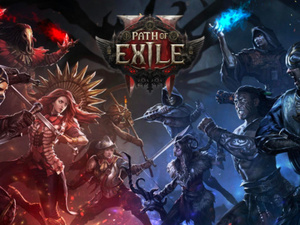
Sharp concurrency spikes rarely emerge from a single lever; they are composite phenomena. For Path of Exile 2, the recent weekend blow‑up appears to have layered a limited access window, influencer amplification, competitive seasonal fatigue elsewhere, and renewed mechanical clarity into a self‑reinforcing discovery loop.
First, access psychology. A broadened technical test (with relaxed NDA tiers) created a fear‑of‑missing‑out funnel: watch a streamer experiment with transformed skill socketing, then request a key or reinstall pre‑emptively. Path of Exile’s original complexity—both a hook and initial intimidation gate—has in the sequel’s marketing pivoted toward “depth with legibility.” Cleaner tooltip hierarchies and early progression scaffolding were showcased deliberately on streams, converting lurkers who previously bounced off the cognitive load.
Second, combat readability upgrades demoed well. Enhanced animation priority, telegraphed boss wind‑ups with standardized color language, and directional audio cues for off‑screen threats gave the game an esports‑adjacent crispness clips could package. Viral micro‑moments—chain‑shattering a stagger phase with a perfectly timed elemental swap—seeded short‑form platforms, broadening reach beyond entrenched ARPG subreddits.
Third, macro timing helped. A lull in competitor beat cycles (season resets either just concluded or were weeks out) left high‑engagement loot chasers browsing for interim mastery loops. Path of Exile 2’s promise of fresh ascendancy identity expression without invalidating investment in the first game’s economy (thanks to parallel support messaging) lowered switching friction.
Economy watchers also noted early design signals curbing runaway inflation: binding certain chase crafting catalysts to account progression milestones discouraged rapid market cornering, suggesting a more democratized early ladder. That narrative—“jump in now before meta finance ossifies”—accelerated adoption.
Grinding Gear Games’ communication layering matters here. Patchlet threads detailing micro‑iteration on skill interactions (explaining not just what changed but why) build para‑social trust. When a dev clarifies that a nerf to a mana loop isn’t punitive but to preserve build diversity endgame, players feel co‑author rather than lab rat—a posture that lubricates re‑engagement.
Technology performance also played a non‑flashy yet decisive role. Stable frame pacing during dense minion plus projectile board states let hardware mid‑tiers showcase watchable streams free of artifact stutter. Server elasticity scaling (spooling up additional instances ahead of expected prime time invasion waves) minimized queue screenshots—a meme often weaponized against launches.
Is 30x sustainable? Of course not at peak amplitude. The metric’s significance is catalytic: an expanded pool of testers stress‑testing edge cases, generating feedback telemetry to tighten balance before broader rollout. Retention hinges on near‑term beats: introducing a curated “on‑ramp league” that rotates spotlight builds for educational purposes, or a competitive race event incentivizing optimized pathing solves.
Monetization conversation lingers at the periphery. Cosmetic transparency (delineating clearly paid effect skins from drop‑earned variants) softens pre‑launch skepticism, a lesson learned industry‑wide after battle pass fatigue. If Grinding Gear sustains a fairness narrative while preserving deep theorycraft space, Path of Exile 2 can convert this surge into a stable plateau above legacy baselines.
For now, the spike is a signal: the ARPG audience appetite for iterative complexity wrapped in modern UX hasn’t waned. Path of Exile 2’s weekend wasn’t an accident—it was orchestrated resonance.
First, access psychology. A broadened technical test (with relaxed NDA tiers) created a fear‑of‑missing‑out funnel: watch a streamer experiment with transformed skill socketing, then request a key or reinstall pre‑emptively. Path of Exile’s original complexity—both a hook and initial intimidation gate—has in the sequel’s marketing pivoted toward “depth with legibility.” Cleaner tooltip hierarchies and early progression scaffolding were showcased deliberately on streams, converting lurkers who previously bounced off the cognitive load.
Second, combat readability upgrades demoed well. Enhanced animation priority, telegraphed boss wind‑ups with standardized color language, and directional audio cues for off‑screen threats gave the game an esports‑adjacent crispness clips could package. Viral micro‑moments—chain‑shattering a stagger phase with a perfectly timed elemental swap—seeded short‑form platforms, broadening reach beyond entrenched ARPG subreddits.
Third, macro timing helped. A lull in competitor beat cycles (season resets either just concluded or were weeks out) left high‑engagement loot chasers browsing for interim mastery loops. Path of Exile 2’s promise of fresh ascendancy identity expression without invalidating investment in the first game’s economy (thanks to parallel support messaging) lowered switching friction.
Economy watchers also noted early design signals curbing runaway inflation: binding certain chase crafting catalysts to account progression milestones discouraged rapid market cornering, suggesting a more democratized early ladder. That narrative—“jump in now before meta finance ossifies”—accelerated adoption.
Grinding Gear Games’ communication layering matters here. Patchlet threads detailing micro‑iteration on skill interactions (explaining not just what changed but why) build para‑social trust. When a dev clarifies that a nerf to a mana loop isn’t punitive but to preserve build diversity endgame, players feel co‑author rather than lab rat—a posture that lubricates re‑engagement.
Technology performance also played a non‑flashy yet decisive role. Stable frame pacing during dense minion plus projectile board states let hardware mid‑tiers showcase watchable streams free of artifact stutter. Server elasticity scaling (spooling up additional instances ahead of expected prime time invasion waves) minimized queue screenshots—a meme often weaponized against launches.
Is 30x sustainable? Of course not at peak amplitude. The metric’s significance is catalytic: an expanded pool of testers stress‑testing edge cases, generating feedback telemetry to tighten balance before broader rollout. Retention hinges on near‑term beats: introducing a curated “on‑ramp league” that rotates spotlight builds for educational purposes, or a competitive race event incentivizing optimized pathing solves.
Monetization conversation lingers at the periphery. Cosmetic transparency (delineating clearly paid effect skins from drop‑earned variants) softens pre‑launch skepticism, a lesson learned industry‑wide after battle pass fatigue. If Grinding Gear sustains a fairness narrative while preserving deep theorycraft space, Path of Exile 2 can convert this surge into a stable plateau above legacy baselines.
For now, the spike is a signal: the ARPG audience appetite for iterative complexity wrapped in modern UX hasn’t waned. Path of Exile 2’s weekend wasn’t an accident—it was orchestrated resonance.


