Blizzard has officially published full patch notes for the Midnight Pre-Expansion Update, arriving on January 20. The headline features, new UI and Housing systems, a stat and item level squish, addon adjustments, and extensive class changes; make this one of those patches that doesn’t just tweak WoW; it redefines how it feels to play.
The pre-patch is where the community’s meta gets rewritten overnight.

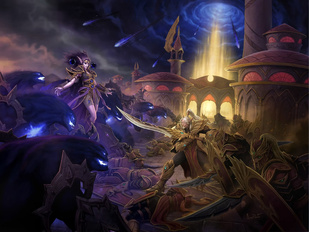
Pre-expansion patches are WoW’s annual(ish) ritual of chaos and opportunity: everything changes, everyone’s rotation breaks, and your UI either becomes cleaner—or becomes a crime scene. With Blizzard releasing full notes for the Midnight Pre-Expansion Update scheduled for January 20, this looks like a particularly heavyweight pre-patch, mixing long-requested quality-of-life upgrades with the kind of systemic redesign that turns the game’s meta into fresh snow.
The attention-grabbers are the UI updates and Housing. UI modernization is rarely flashy, but it’s the part of WoW you touch every second you play. A cleaner baseline UI also shifts the relationship with addons: some players celebrate fewer dependencies, while addon power users worry about muscle memory and custom workflows. Which leads neatly into addon adjustments—usually code for “your favorite thing might need an update, and your raid night might be spicy.”
Housing, meanwhile, is the feature that tends to pull in lapsed players and roleplayers as much as raiders. In MMORPG culture, housing isn’t just decoration—it’s identity. It’s a social anchor, a reason to log in when you’re not chasing gear. The real test won’t be “does housing exist,” but how it’s implemented: is it instanced or neighborhood-based, how deep are customization tools, and is it genuinely integrated into progression and social play rather than being a detached minigame?
Then there’s the stat and item level squish, the most mathematically dramatic change listed. Squishes are meant to make numbers readable again, reduce scaling weirdness, and keep power progression psychologically satisfying without hitting absurd values. The trade-off is that every squish temporarily destabilizes tuning. Old content can feel odd, leveling breakpoints shift, and the community spends weeks testing what “feels” weaker even when it’s theoretically equivalent. Perception matters in MMOs, and squishes are perception grenades.
Finally, the largest practical impact for day-to-day players will be “massive changes to every class.” That phrase is both exciting and terrifying, depending on whether your spec has been eating nerfs for breakfast. In a pre-patch environment, Blizzard often uses this window to lay groundwork for the expansion’s design philosophy: pruning bloat, re-centering class identity, and rebalancing talent interactions. It’s also where the community’s content engine kicks into overdrive—guides, sims, tier lists, and the inevitable “is my class dead?” posts.
January 20, then, isn’t just a date. It’s a reset button. And in WoW, resets are where new stories start: new mains, new guild comps, new UI setups, and new arguments in trade chat that somehow last longer than entire expansions.
The attention-grabbers are the UI updates and Housing. UI modernization is rarely flashy, but it’s the part of WoW you touch every second you play. A cleaner baseline UI also shifts the relationship with addons: some players celebrate fewer dependencies, while addon power users worry about muscle memory and custom workflows. Which leads neatly into addon adjustments—usually code for “your favorite thing might need an update, and your raid night might be spicy.”
Housing, meanwhile, is the feature that tends to pull in lapsed players and roleplayers as much as raiders. In MMORPG culture, housing isn’t just decoration—it’s identity. It’s a social anchor, a reason to log in when you’re not chasing gear. The real test won’t be “does housing exist,” but how it’s implemented: is it instanced or neighborhood-based, how deep are customization tools, and is it genuinely integrated into progression and social play rather than being a detached minigame?
Then there’s the stat and item level squish, the most mathematically dramatic change listed. Squishes are meant to make numbers readable again, reduce scaling weirdness, and keep power progression psychologically satisfying without hitting absurd values. The trade-off is that every squish temporarily destabilizes tuning. Old content can feel odd, leveling breakpoints shift, and the community spends weeks testing what “feels” weaker even when it’s theoretically equivalent. Perception matters in MMOs, and squishes are perception grenades.
Finally, the largest practical impact for day-to-day players will be “massive changes to every class.” That phrase is both exciting and terrifying, depending on whether your spec has been eating nerfs for breakfast. In a pre-patch environment, Blizzard often uses this window to lay groundwork for the expansion’s design philosophy: pruning bloat, re-centering class identity, and rebalancing talent interactions. It’s also where the community’s content engine kicks into overdrive—guides, sims, tier lists, and the inevitable “is my class dead?” posts.
January 20, then, isn’t just a date. It’s a reset button. And in WoW, resets are where new stories start: new mains, new guild comps, new UI setups, and new arguments in trade chat that somehow last longer than entire expansions.


