

 L'accueil

A brief website outage was all it took to send the Highguard community into a spiral. With the controversial PvP raid shooter already facing mixed reviews, low player numbers, and reports of staff departures at Wildlight Entertainment, many assumed the downtime meant the end. A developer at the studio now says the website is simply being transferred, and the game isn’t shutting down “just yet.”
Developer claims the site is being moved and simplified

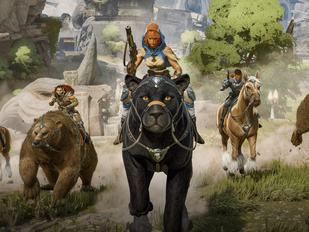
In live-service gaming, perception can be as lethal as patch notes. And for Highguard, a sudden website outage landed like a fire alarm in a crowded theater.
The controversial PvP raid shooter has been living under a cloud: a dwindling player count, mixed reviews, and the kind of community fatigue that turns every silence into a sign. So when the game’s website went dark, speculation ignited instantly,s creenshots spread, threads multiplied, and the inevitable phrase “servers next” started trending in player circles.
This week, a developer at Wildlight Entertainment pushed back on that narrative, stating that the site outage was tied to a transfer and a simplification effort rather than an imminent shutdown. In other words: the web presence is moving; the game isn’t being pulled offline, at least not right now.
That reassurance matters, but it doesn’t erase why the rumor felt believable. Live-service titles train players to read tea leaves: fewer updates, slower comms, staff churn, and abrupt changes to infrastructure can signal cost-cutting or wind-down planning. When you add the reported exodus of Wildlight employees into the mix, the “website down” moment didn’t look like a minor IT hiccup. It looked like the first domino.
The bigger story here is how fragile trust becomes when a game’s momentum stalls. Highguard is the kind of premise that can thrive in the right ecosystem: a PvP raid shooter lives on tension, loot incentives, and an active population that keeps matchmaking healthy. But once concurrency drops below a certain threshold, the experience starts to cannibalize itself. Queue times stretch, skill gaps widen, and remaining players feel like they’re scrimming in a half-lit gym. Even strong mechanical design struggles against pure math.
A simplified website might be a perfectly rational move, less overhead, clearer messaging, fewer moving parts. Yet “simplify” can read like “minimize,” and “transfer” can sound like “liquidate,” especially when players are already braced for bad news. That’s not on the community; it’s a predictable response to a market where games vanish regularly with little warning.
For Wildlight, the practical takeaway is brutally simple: if the goal is to keep Highguard alive, stability needs to be visible. That means consistent status updates, clear roadmaps (even small ones), and rapid clarification when outages happen. Silence is a design choice now, and players interpret it.
For players, the lesson is equally modern: a website outage is not proof of a shutdown, but in 2026, it’s understandable that it feels like one. Highguard may not be going anywhere today. The question is whether the studio can convert “not dead yet” into “worth sticking with.”
The controversial PvP raid shooter has been living under a cloud: a dwindling player count, mixed reviews, and the kind of community fatigue that turns every silence into a sign. So when the game’s website went dark, speculation ignited instantly,s creenshots spread, threads multiplied, and the inevitable phrase “servers next” started trending in player circles.
This week, a developer at Wildlight Entertainment pushed back on that narrative, stating that the site outage was tied to a transfer and a simplification effort rather than an imminent shutdown. In other words: the web presence is moving; the game isn’t being pulled offline, at least not right now.
That reassurance matters, but it doesn’t erase why the rumor felt believable. Live-service titles train players to read tea leaves: fewer updates, slower comms, staff churn, and abrupt changes to infrastructure can signal cost-cutting or wind-down planning. When you add the reported exodus of Wildlight employees into the mix, the “website down” moment didn’t look like a minor IT hiccup. It looked like the first domino.
The bigger story here is how fragile trust becomes when a game’s momentum stalls. Highguard is the kind of premise that can thrive in the right ecosystem: a PvP raid shooter lives on tension, loot incentives, and an active population that keeps matchmaking healthy. But once concurrency drops below a certain threshold, the experience starts to cannibalize itself. Queue times stretch, skill gaps widen, and remaining players feel like they’re scrimming in a half-lit gym. Even strong mechanical design struggles against pure math.
A simplified website might be a perfectly rational move, less overhead, clearer messaging, fewer moving parts. Yet “simplify” can read like “minimize,” and “transfer” can sound like “liquidate,” especially when players are already braced for bad news. That’s not on the community; it’s a predictable response to a market where games vanish regularly with little warning.
For Wildlight, the practical takeaway is brutally simple: if the goal is to keep Highguard alive, stability needs to be visible. That means consistent status updates, clear roadmaps (even small ones), and rapid clarification when outages happen. Silence is a design choice now, and players interpret it.
For players, the lesson is equally modern: a website outage is not proof of a shutdown, but in 2026, it’s understandable that it feels like one. Highguard may not be going anywhere today. The question is whether the studio can convert “not dead yet” into “worth sticking with.”


 Accueil
 Envoyer à un ami
 Version imprimable
 Augmenter la taille du texte
 Diminuer la taille du texte
 Partager