




 L'accueil

YouTube, the world’s biggest video platform, suffered a widespread outage on February 17, leaving many users unable to load videos across both desktop and mobile. Social media lit up with reports and DownDetector spikes. By 12:00 AM Eastern, most functions had returned, ending an outage that lasted roughly two hours, with no official statement from YouTube at the time of recovery.
DownDetector spikes as social feeds fill with reports

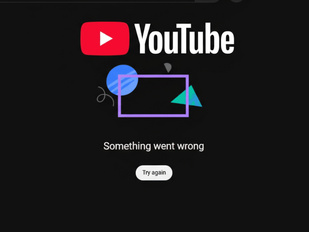
When YouTube sneezes, the internet catches a cold, and on February 17, it felt like the whole web reached for the tissues at once.
Users around the world reported that YouTube was down for most of them, with issues affecting both the desktop site and mobile apps. The symptom list was familiar to anyone who has lived through a platform outage: videos refusing to load, feeds timing out, and core features behaving like they were wading through wet cement. Within minutes, social media became an impromptu diagnostics board, people comparing regions, devices, and connection types, trying to figure out whether the problem was local, ISP-related, or global.
Third-party outage trackers such as DownDetector reflected the same story: a sudden surge of reports, then gradual normalization. The collective reaction wasn’t just inconvenience; it was a reminder of how deeply YouTube is woven into everyday life. For creators, YouTube isn’t merely a website, it’s a storefront, a broadcast network, a portfolio, and a paycheck pipeline. For viewers, it’s where entertainment, education, music, tutorials, and “I’ll just watch one more” spirals all coexist.
Then came the update: as of 12:00 AM Eastern, most YouTube functions had returned to normal. The outage lasted approximately two hours. Some reports still suggested lingering issues on desktop and mobile, but overall services were back online. At the time referenced in the update, YouTube had not officially commented on the earlier disruption.
From a gaming perspective, outages like this hit with particular force. YouTube isn’t just where trailers live; it’s where patch breakdowns, esports highlights, speedruns, lore essays, and platform-native creators build communities that can rival the games themselves. A two-hour downtime can interrupt livestream VOD pipelines, delay scheduled uploads, and distort analytics, especially for channels that rely on precise timing around launches, reveals, or tournament moments.
What’s striking is how quickly the internet now performs “collective troubleshooting.” In the past, you might call your provider or restart a router. Today, people triangulate the truth in real time: check Twitter, check Reddit, check DownDetector, check group chats. The goal isn’t just to fix the issue; it’s to confirm you’re not alone. That social confirmation loop has become a standard part of outage behavior, almost a new layer of infrastructure.
The lack of immediate official comment is also common in fast-moving incidents. Large platforms often prioritize restoration first, then communication once the root cause is verified. Still, for creators whose livelihoods depend on stability, transparency matters, especially when outages overlap with major upload windows or monetization cycles.
In the end, this outage was short in the grand scheme. But it underlined a modern truth: YouTube has become so central that even a brief disruption feels like a partial internet blackout. For better or worse, “the video site” is now part of the world’s basic digital plumbing, and everyone notices when the pipes rattle.
Users around the world reported that YouTube was down for most of them, with issues affecting both the desktop site and mobile apps. The symptom list was familiar to anyone who has lived through a platform outage: videos refusing to load, feeds timing out, and core features behaving like they were wading through wet cement. Within minutes, social media became an impromptu diagnostics board, people comparing regions, devices, and connection types, trying to figure out whether the problem was local, ISP-related, or global.
Third-party outage trackers such as DownDetector reflected the same story: a sudden surge of reports, then gradual normalization. The collective reaction wasn’t just inconvenience; it was a reminder of how deeply YouTube is woven into everyday life. For creators, YouTube isn’t merely a website, it’s a storefront, a broadcast network, a portfolio, and a paycheck pipeline. For viewers, it’s where entertainment, education, music, tutorials, and “I’ll just watch one more” spirals all coexist.
Then came the update: as of 12:00 AM Eastern, most YouTube functions had returned to normal. The outage lasted approximately two hours. Some reports still suggested lingering issues on desktop and mobile, but overall services were back online. At the time referenced in the update, YouTube had not officially commented on the earlier disruption.
From a gaming perspective, outages like this hit with particular force. YouTube isn’t just where trailers live; it’s where patch breakdowns, esports highlights, speedruns, lore essays, and platform-native creators build communities that can rival the games themselves. A two-hour downtime can interrupt livestream VOD pipelines, delay scheduled uploads, and distort analytics, especially for channels that rely on precise timing around launches, reveals, or tournament moments.
What’s striking is how quickly the internet now performs “collective troubleshooting.” In the past, you might call your provider or restart a router. Today, people triangulate the truth in real time: check Twitter, check Reddit, check DownDetector, check group chats. The goal isn’t just to fix the issue; it’s to confirm you’re not alone. That social confirmation loop has become a standard part of outage behavior, almost a new layer of infrastructure.
The lack of immediate official comment is also common in fast-moving incidents. Large platforms often prioritize restoration first, then communication once the root cause is verified. Still, for creators whose livelihoods depend on stability, transparency matters, especially when outages overlap with major upload windows or monetization cycles.
In the end, this outage was short in the grand scheme. But it underlined a modern truth: YouTube has become so central that even a brief disruption feels like a partial internet blackout. For better or worse, “the video site” is now part of the world’s basic digital plumbing, and everyone notices when the pipes rattle.


 Accueil
 Envoyer à un ami
 Version imprimable
 Augmenter la taille du texte
 Diminuer la taille du texte
 Partager


