




 L'accueil

Director Naoki Hamaguchi says fan feedback is shaping the finale

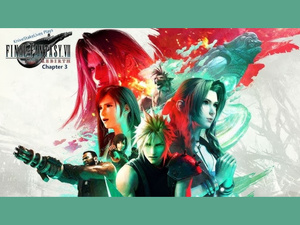
Final Fantasy 7 Rebirth rekindled the Midgar fire with sprawling zones, kinetic combat, and a reimagined story that split the community in fascinating ways. Now, director Naoki Hamaguchi is signaling an even more collaborative approach for the trilogy’s finale: listening closely, and acting decisively.
What does that mean in practice? Fans have praised Rebirth’s set-piece brilliance and party banter while nitpicking open-world sprawl, side quest variance, and certain progression pacing. If Square Enix prioritizes sharper quest curation, clearer reward loops, and smarter fast-travel cadence, the final entry could retain Rebirth’s highs while smoothing its edges.
Combat is another pressure point. The hybrid system earned love for its flashy synergy and ATB depth, but some players wanted tighter difficulty tuning and better on-boarding for advanced builds. Expect learnings here, perhaps via improved tutorials, more transparent stat scaling, and boss encounters that ask for creativity without demanding spreadsheet-level prep.
Narratively, the trilogy has flirted with meta-text and multiverse threads—catnip for some, a headache for others. Hamaguchi’s nod to feedback suggests a finale that anchors its boldness in character stakes: Cloud’s burden, Tifa’s resolve, Aerith’s fate, and the crew’s fragile bonds. If the ending sticks an emotional landing while respecting player expectations, it could bridge the remake-versus-rewrite divide.
The broader takeaway is healthy: a major studio acknowledging critique without defensiveness. Great series evolve by absorbing friction, not deflecting it. For a legend like FF7, that humility could be the difference between a strong close and an all-timer. As development continues, the best clue will be communication cadence: specific changes, not vague promises.
Fans are ready to party up one last time. If Square Enix converts the noise into nuance, the finale might just be the definitive version of a story we thought we already knew.
What does that mean in practice? Fans have praised Rebirth’s set-piece brilliance and party banter while nitpicking open-world sprawl, side quest variance, and certain progression pacing. If Square Enix prioritizes sharper quest curation, clearer reward loops, and smarter fast-travel cadence, the final entry could retain Rebirth’s highs while smoothing its edges.
Combat is another pressure point. The hybrid system earned love for its flashy synergy and ATB depth, but some players wanted tighter difficulty tuning and better on-boarding for advanced builds. Expect learnings here, perhaps via improved tutorials, more transparent stat scaling, and boss encounters that ask for creativity without demanding spreadsheet-level prep.
Narratively, the trilogy has flirted with meta-text and multiverse threads—catnip for some, a headache for others. Hamaguchi’s nod to feedback suggests a finale that anchors its boldness in character stakes: Cloud’s burden, Tifa’s resolve, Aerith’s fate, and the crew’s fragile bonds. If the ending sticks an emotional landing while respecting player expectations, it could bridge the remake-versus-rewrite divide.
The broader takeaway is healthy: a major studio acknowledging critique without defensiveness. Great series evolve by absorbing friction, not deflecting it. For a legend like FF7, that humility could be the difference between a strong close and an all-timer. As development continues, the best clue will be communication cadence: specific changes, not vague promises.
Fans are ready to party up one last time. If Square Enix converts the noise into nuance, the finale might just be the definitive version of a story we thought we already knew.


 Accueil
 Envoyer à un ami
 Version imprimable
 Augmenter la taille du texte
 Diminuer la taille du texte
 Partager


