




 L'accueil

Player feedback reverses policy

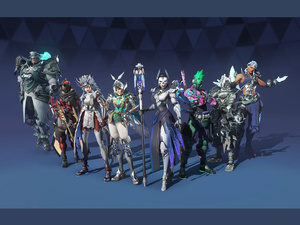
The pendulum of competitive rulesets in live service shooters rarely rests for long. Overwatch 2’s latest swing brings back something the design team briefly tried to excise: mirror compositions. By lifting the ban inside Competitive Stadium—a ranked context that had been testing structural tweaks to differentiate it from core Competitive—the developers acknowledge a mismatch between theoretical design goals and emergent player sentiment. For many, preventing both sides from fielding the same hero roster felt less like innovation and more like an arbitrary layer masking deeper balance anxieties.
Mirror bans aim at several targets in theory. They can reduce stagnation by forcing divergent draft ecosystems, potentially surfacing underplayed heroes and accelerating data collection on fringe kits. They also promise more watchable asymmetry for spectators. But Overwatch’s DNA is anchored in counterplay literacy: players internalize timing windows, ultimate trade patterns, and positional risk through repeated exposure to identical hero toolkits from both friendly and hostile perspectives. Strip that familiarity loop, and you inadvertently slow mechanical skill acquisition while blurring the feedback players rely on to calibrate engagements.
Community feedback channels—Reddit threads parsing scrim footage, creator breakdowns, in‑client reporting—coalesced around a consistent critique: the non‑mirror rule occasionally generated lopsided feel‑bads when one team secured a comfort pick comp that the other simply could not parallel, increasing variance unrelated to team synergy or mechanical execution. What reads as “freshness” in a design doc can translate into “arbitrary handicap” at 160 BPM in a tight overtime fight.
Reinstating mirrors reopens the classic strategic gambit space: do you match a meta Chase & Sustain formation to neutralize variance, or gamble on a disruption pivot hoping to desync opponent ultimate pacing? Balance designers now regain a clearer dataset because pick rate deviations can more reliably be attributed to hero state rather than structural prohibition. That enhances patch diagnostics, enabling more confident micro‑tuning of outlier cooldowns or survivability breakpoints.
The reversal also underscores a broader tension in live multiplayer stewardship: when does experimentation energize, and when does it erode trust? Overwatch 2’s evolution since launch has layered mode experiments, progression reworks, and hero cadence adjustments into a cadence that can fatigue players who perceive systemic ground constantly shifting under their mastery. Listening publicly—framing this rollback not as capitulation but as iterative learning—helps repair cognitive friction that any competitive ecosystem accumulates.
Risks remain. Mirrors can accelerate meta ossification if balance patches lag, and newly reintroduced duplication may concentrate frustration around perennial pain points like burst mitigation or sustain stacking. The onus is now on the team to leverage the richer mirror dataset for proactive tuning rather than reactive fire drills. Transparent communication—previewing candidate nerfs or buffs with rationale—will amplify the goodwill generated by honoring feedback.
For players climbing Competitive Stadium today, the change translates into instant agency restoration. Comfort duos can lock favorite synergies without gambling on exclusivity. Analysts and coaches regain a cleaner slate for VOD review pattern recognition. Whether the broader ecosystem trends toward healthier variety or reverts to narrow optimality will hinge on how swiftly Blizzard acts on the telemetry they invited back in. Mirrors, like any tool, are value neutral; design intent and maintenance decide the rest.
Mirror bans aim at several targets in theory. They can reduce stagnation by forcing divergent draft ecosystems, potentially surfacing underplayed heroes and accelerating data collection on fringe kits. They also promise more watchable asymmetry for spectators. But Overwatch’s DNA is anchored in counterplay literacy: players internalize timing windows, ultimate trade patterns, and positional risk through repeated exposure to identical hero toolkits from both friendly and hostile perspectives. Strip that familiarity loop, and you inadvertently slow mechanical skill acquisition while blurring the feedback players rely on to calibrate engagements.
Community feedback channels—Reddit threads parsing scrim footage, creator breakdowns, in‑client reporting—coalesced around a consistent critique: the non‑mirror rule occasionally generated lopsided feel‑bads when one team secured a comfort pick comp that the other simply could not parallel, increasing variance unrelated to team synergy or mechanical execution. What reads as “freshness” in a design doc can translate into “arbitrary handicap” at 160 BPM in a tight overtime fight.
Reinstating mirrors reopens the classic strategic gambit space: do you match a meta Chase & Sustain formation to neutralize variance, or gamble on a disruption pivot hoping to desync opponent ultimate pacing? Balance designers now regain a clearer dataset because pick rate deviations can more reliably be attributed to hero state rather than structural prohibition. That enhances patch diagnostics, enabling more confident micro‑tuning of outlier cooldowns or survivability breakpoints.
The reversal also underscores a broader tension in live multiplayer stewardship: when does experimentation energize, and when does it erode trust? Overwatch 2’s evolution since launch has layered mode experiments, progression reworks, and hero cadence adjustments into a cadence that can fatigue players who perceive systemic ground constantly shifting under their mastery. Listening publicly—framing this rollback not as capitulation but as iterative learning—helps repair cognitive friction that any competitive ecosystem accumulates.
Risks remain. Mirrors can accelerate meta ossification if balance patches lag, and newly reintroduced duplication may concentrate frustration around perennial pain points like burst mitigation or sustain stacking. The onus is now on the team to leverage the richer mirror dataset for proactive tuning rather than reactive fire drills. Transparent communication—previewing candidate nerfs or buffs with rationale—will amplify the goodwill generated by honoring feedback.
For players climbing Competitive Stadium today, the change translates into instant agency restoration. Comfort duos can lock favorite synergies without gambling on exclusivity. Analysts and coaches regain a cleaner slate for VOD review pattern recognition. Whether the broader ecosystem trends toward healthier variety or reverts to narrow optimality will hinge on how swiftly Blizzard acts on the telemetry they invited back in. Mirrors, like any tool, are value neutral; design intent and maintenance decide the rest.


 Accueil
 Envoyer à un ami
 Version imprimable
 Augmenter la taille du texte
 Diminuer la taille du texte
 Partager


