

 L'accueil

Crossover timing primes both franchises’ engagement funnels.

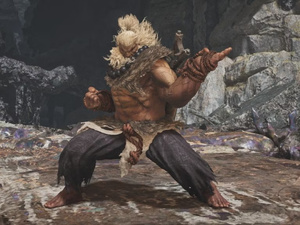
When Capcom finds internal brand synergy, it rarely settles for a token costume drop. The new Street Fighter 6 x Monster Hunter Wilds collaboration, kicking off September 1, extends that playbook: an engagement bridge that lifts awareness of the upcoming Wilds while refreshing Street Fighter’s live-service cadence with layered reward loops. For a fighter built on modernization, World Tour RPG-lite progression, robust rollback netcode, creator partnerships, tying in Capcom’s other flagship action DNA feels near inevitable.
At the surface tier, players can expect avatar gear evocative of Monster Hunter’s iconic crafting silhouettes: horned helms, scaled mail, possibly weapon transmogs stylized after great swords or insect glaives (purely cosmetic within Street Fighter’s mechanics). Emotes, titles, photo mode stickers, and stickers for Battle Hub social boards extend expression vectors, vital in a community where identity presentation lubricates retention between ranked grind sessions.
Deeper integration likely surfaces through limited-time Hub events or themed World Tour encounters. Past crossovers have experimented with NPC challenge quests matching special move conditions; here, we might see trials awarding “carved” ticket currencies redeemed for collaboration loot. Capcom’s live ops pacing typically frontloads accessibility: low-skill path for cosmetic basics, mastery path for prestige variants (gold-trim, animated auras). Expect layered FOMO tuned to nudge daily check-ins without overwhelming players already juggling Fighting Pass progression.
Marketing-wise, anchoring Wilds promotion inside Street Fighter accomplishes two objectives. First, it re-engages lapsed SF6 owners pre-holiday with novel goals. Second, it recontextualizes Monster Hunter Wilds not just as a sequel but as a broader Capcom ecosystem pillar, wrapping it in an urban, globally broadcast Battle Hub space. Cross-franchise seeding primes social media virality as players share hybrid costume screenshots, amplifying reach beyond traditional Monster Hunter community channels.
From a systems standpoint, collaborations also stress test modular content injection pipelines. Smooth deployment of themed assets without destabilizing balance or netcode reliability builds trust that future seasonal refreshes (new characters, balance passes) can arrive with minimal friction. Capcom has messaged a long runway for SF6 support, regular character drops, and crossovers act as palate cleansers between heavier mechanical patch bundles.
Thematically, blending the tactical spacing of footsies with the preparation ethos of a hunt invites playful reinterpretation. While Street Fighter will not morph into a loot grinder, subtle design nods : quest-like wording on challenge cards, item flavor text referencing endemic life—reinforce brand cohesion. Players speculating about future Wilds monsters glean crumbs from iconography choices, fueling theorycraft threads that double as ambient hype engines.
Ultimately, the collaboration underscores a modern reality: evergreen fighting games compete for attention against sprawling live-service genres. Borrowing event design cadence from Monster Hunter lets Street Fighter 6 sustain momentum without accelerating power creep. For fans of both franchises, September becomes less a wait and more an interactive teaser, an appetizer course of claws, scales, and Hadoukens.
At the surface tier, players can expect avatar gear evocative of Monster Hunter’s iconic crafting silhouettes: horned helms, scaled mail, possibly weapon transmogs stylized after great swords or insect glaives (purely cosmetic within Street Fighter’s mechanics). Emotes, titles, photo mode stickers, and stickers for Battle Hub social boards extend expression vectors, vital in a community where identity presentation lubricates retention between ranked grind sessions.
Deeper integration likely surfaces through limited-time Hub events or themed World Tour encounters. Past crossovers have experimented with NPC challenge quests matching special move conditions; here, we might see trials awarding “carved” ticket currencies redeemed for collaboration loot. Capcom’s live ops pacing typically frontloads accessibility: low-skill path for cosmetic basics, mastery path for prestige variants (gold-trim, animated auras). Expect layered FOMO tuned to nudge daily check-ins without overwhelming players already juggling Fighting Pass progression.
Marketing-wise, anchoring Wilds promotion inside Street Fighter accomplishes two objectives. First, it re-engages lapsed SF6 owners pre-holiday with novel goals. Second, it recontextualizes Monster Hunter Wilds not just as a sequel but as a broader Capcom ecosystem pillar, wrapping it in an urban, globally broadcast Battle Hub space. Cross-franchise seeding primes social media virality as players share hybrid costume screenshots, amplifying reach beyond traditional Monster Hunter community channels.
From a systems standpoint, collaborations also stress test modular content injection pipelines. Smooth deployment of themed assets without destabilizing balance or netcode reliability builds trust that future seasonal refreshes (new characters, balance passes) can arrive with minimal friction. Capcom has messaged a long runway for SF6 support, regular character drops, and crossovers act as palate cleansers between heavier mechanical patch bundles.
Thematically, blending the tactical spacing of footsies with the preparation ethos of a hunt invites playful reinterpretation. While Street Fighter will not morph into a loot grinder, subtle design nods : quest-like wording on challenge cards, item flavor text referencing endemic life—reinforce brand cohesion. Players speculating about future Wilds monsters glean crumbs from iconography choices, fueling theorycraft threads that double as ambient hype engines.
Ultimately, the collaboration underscores a modern reality: evergreen fighting games compete for attention against sprawling live-service genres. Borrowing event design cadence from Monster Hunter lets Street Fighter 6 sustain momentum without accelerating power creep. For fans of both franchises, September becomes less a wait and more an interactive teaser, an appetizer course of claws, scales, and Hadoukens.


 Accueil
 Envoyer à un ami
 Version imprimable
 Augmenter la taille du texte
 Diminuer la taille du texte
 Partager