




 L'accueil

New reports claim a sequel to Batman: Arkham Shadow was in development but has now been canceled—news that surfaced immediately after layoffs struck Meta’s Reality Labs and multiple VR studios reportedly closed, including Sanzaru Games, the team rumored to be attached to the project.
Studio closures highlight how fragile big licensed VR projects can be.

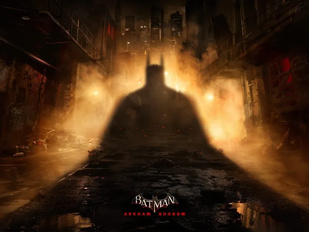
If you want a snapshot of VR’s biggest challenge in 2026, it’s this: the medium can deliver standout games, but the business behind them still feels like it’s built on trapdoors. According to recent reports, a sequel to Batman: Arkham Shadow was in development before being canceled—timed, not coincidentally, with widespre ad layoffs in Meta’s Reality Labs and the reported closure of three VR development studios, including Sanzaru Games.
Even without official confirmation on every detail, the through-line is familiar. Big licensed VR games are expensive. They need top-tier animation, bespoke interaction systems, comfort options, and platform-level optimization. Add a premium IP like Batman, and you’re also juggling brand expectations, approvals, and marketing pressures. That’s a lot of weight for a market that still fights for consistent attach rates beyond the enthusiast crowd.
Sanzaru’s name matters here because it’s associated—at least in reporting—with the kind of polished VR production that can justify a blockbuster license. When a studio like that gets hit by closure or deep cuts, it doesn’t just pause a project; it often erases the institutional muscle memory that VR development depends on. VR isn’t just “make a console game, but in a headset.” It’s comfort science, interaction design, performance discipline, and endless testing to avoid nausea and input frustration.
The cancellation, if accurate, also lands in a cultural moment where gamers are increasingly aware of how much work disappears behind the scenes. You can have a game that reviews well, streams well, and builds a passionate niche—and still not be “safe” if the parent company changes strategic direction, reallocates budgets, or decides that the timeline to profitability is too long.
For fans of the Arkham-style Batman fantasy, the frustration is doubled. The Arkham brand has a legacy of tight combat design, detective vibes, and that particular “predator room” tension. VR is uniquely suited to amplifying those sensations—being physically inside Gotham, turning your head to track footsteps, leaning around cover. A sequel could have been the rare thing VR needs: continuity. A reason for players to stay invested beyond tech demos and one-off experiments.
Instead, the story (again, based on reporting) becomes another entry in VR’s growing list of “almosts.” The good news is that talent doesn’t vanish; developers move, regroup, and bring lessons with them. The bad news is that licensed projects often don’t survive that migration, because rights, contracts, and approvals don’t travel easily.
If the reports hold, Arkham Shadow may end up remembered not as the start of a new VR pillar, but as a strong standalone—proof of what VR can do, and a reminder of how quickly corporate reality can override virtual reality.
Even without official confirmation on every detail, the through-line is familiar. Big licensed VR games are expensive. They need top-tier animation, bespoke interaction systems, comfort options, and platform-level optimization. Add a premium IP like Batman, and you’re also juggling brand expectations, approvals, and marketing pressures. That’s a lot of weight for a market that still fights for consistent attach rates beyond the enthusiast crowd.
Sanzaru’s name matters here because it’s associated—at least in reporting—with the kind of polished VR production that can justify a blockbuster license. When a studio like that gets hit by closure or deep cuts, it doesn’t just pause a project; it often erases the institutional muscle memory that VR development depends on. VR isn’t just “make a console game, but in a headset.” It’s comfort science, interaction design, performance discipline, and endless testing to avoid nausea and input frustration.
The cancellation, if accurate, also lands in a cultural moment where gamers are increasingly aware of how much work disappears behind the scenes. You can have a game that reviews well, streams well, and builds a passionate niche—and still not be “safe” if the parent company changes strategic direction, reallocates budgets, or decides that the timeline to profitability is too long.
For fans of the Arkham-style Batman fantasy, the frustration is doubled. The Arkham brand has a legacy of tight combat design, detective vibes, and that particular “predator room” tension. VR is uniquely suited to amplifying those sensations—being physically inside Gotham, turning your head to track footsteps, leaning around cover. A sequel could have been the rare thing VR needs: continuity. A reason for players to stay invested beyond tech demos and one-off experiments.
Instead, the story (again, based on reporting) becomes another entry in VR’s growing list of “almosts.” The good news is that talent doesn’t vanish; developers move, regroup, and bring lessons with them. The bad news is that licensed projects often don’t survive that migration, because rights, contracts, and approvals don’t travel easily.
If the reports hold, Arkham Shadow may end up remembered not as the start of a new VR pillar, but as a strong standalone—proof of what VR can do, and a reminder of how quickly corporate reality can override virtual reality.


 Accueil
 Envoyer à un ami
 Version imprimable
 Augmenter la taille du texte
 Diminuer la taille du texte
 Partager


