

 L'accueil

Discovery culture: the joy of finding an unintended god roll

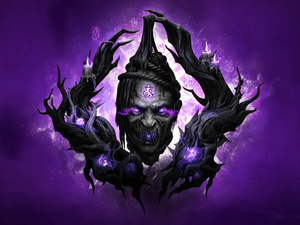
As a grinder who lives for spreadsheets and spontaneous shout-lobbies, I’ll say the quiet part out loud: broken builds are fun. They’re the dopamine jackpot in the ARPG casino. In Diablo 4, the recipe is simple but volatile—seasonal mechanics inject new verbs into your kit, and unique items amplify them in unintended ways. Add a sprinkle of affix stacking and cooldown cheese, and suddenly you’re reverse speedrunning nightmare dungeons with a single button.
Why does this happen? First, seasonal design encourages experimentation. New powers need oxygen to matter; designers intentionally leave interfaces where skills, aspects, and items handshake in surprising ways. Second, ARPG math is multiplicative at heart. When multiple multipliers line up—vulnerable, crit damage, conditional procs—you get exponential outcomes. Third, discovery culture is relentless. The community will always find the shortest path from “works” to “busted.”
The high of an overpowered build is real. You feel like a legend: screen-melting clears, bosses erased in a phase, risk turned into rhythm. It’s a power trip that rewards the knowledge worker inside every looter—farming routes, stat breakpoints, and gear craft all validated by results. But that power is a double-edged sword. When time-to-kill collapses across the board, core gameplay loops flatten. Positioning, resource management, and elite mechanics stop mattering. The RPG becomes a lawnmower, and even for fans of mowing, the lawn eventually ends.
Blizzard’s job is to let us party without burning the house down. The best responses are measured: target the outliers that trivialize content while preserving builds that feel strong but interactive. Nerf the multiplier stacking that acts as a hidden exploit; not the fantasy of the build itself. Likewise, buff underloved skills to widen the viable pool. Communication helps—explain what’s broken, why it’s changing, and what fun you’re trying to protect.
For players, the meta cycle is the game. Enjoy the rollercoaster: chase the OP build, push leaderboards, then pivot when balance patches hit. Keep a second build in your stash to hedge. Track patch notes for language like “interaction,” “unintended,” and “excessive scaling”—those are the nerf sirens. And remember: the most enduring builds aren’t just the strongest; they’re the ones that keep you thinking while you’re winning.
Why does this happen? First, seasonal design encourages experimentation. New powers need oxygen to matter; designers intentionally leave interfaces where skills, aspects, and items handshake in surprising ways. Second, ARPG math is multiplicative at heart. When multiple multipliers line up—vulnerable, crit damage, conditional procs—you get exponential outcomes. Third, discovery culture is relentless. The community will always find the shortest path from “works” to “busted.”
The high of an overpowered build is real. You feel like a legend: screen-melting clears, bosses erased in a phase, risk turned into rhythm. It’s a power trip that rewards the knowledge worker inside every looter—farming routes, stat breakpoints, and gear craft all validated by results. But that power is a double-edged sword. When time-to-kill collapses across the board, core gameplay loops flatten. Positioning, resource management, and elite mechanics stop mattering. The RPG becomes a lawnmower, and even for fans of mowing, the lawn eventually ends.
Blizzard’s job is to let us party without burning the house down. The best responses are measured: target the outliers that trivialize content while preserving builds that feel strong but interactive. Nerf the multiplier stacking that acts as a hidden exploit; not the fantasy of the build itself. Likewise, buff underloved skills to widen the viable pool. Communication helps—explain what’s broken, why it’s changing, and what fun you’re trying to protect.
For players, the meta cycle is the game. Enjoy the rollercoaster: chase the OP build, push leaderboards, then pivot when balance patches hit. Keep a second build in your stash to hedge. Track patch notes for language like “interaction,” “unintended,” and “excessive scaling”—those are the nerf sirens. And remember: the most enduring builds aren’t just the strongest; they’re the ones that keep you thinking while you’re winning.


 Accueil
 Envoyer à un ami
 Version imprimable
 Augmenter la taille du texte
 Diminuer la taille du texte
 Partager