

 L'accueil

Why this “Tier-Only” drop matters

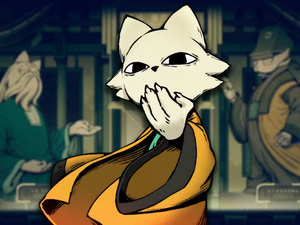
Nine Sols sliding into the Xbox Game Pass Standard lineup this week might look like just another content beat, but the nuance, “Standard tier only” and first of its kind since August 20, turns it into a small but telling strategic marker. Microsoft has spent the past year clarifying the differences between its Game Pass layers (Core for legacy multiplayer access and a small rotating catalog, Standard for a broader console library without day‑one first‑party drops, and Ultimate as the everything bundle with PC, cloud, and perks). To keep Standard from feeling like a passive middle child, it needs touches of curated identity. Nine Sols fits that brief.
Developed by Red Candle Games, Nine Sols is a hand‑drawn 2D action platformer blending Sekiro‑style deflection timing with Hollow Knight exploration energy and a Taoist sci‑fi mythos. Its combat cadence—pressure, parry window, release—rewards rhythm learners over button mashers, which aligns well with a discovery‑forward subscription environment: players can trial, bounce, or commit without friction.
Why make it Standard‑only instead of just pushing it broadly across every Game Pass layer? Three reasons seem plausible. First: differentiation. Since Standard does not promise day‑one blockbuster first‑party titles, elevating premium-feeling indies gives it editorial flavor. Second: retention engineering. A mid‑season exclusive addition can reduce churn spikes that often hit after big tentpole launches elsewhere in the catalog. Third: data experimentation. Microsoft can quietly test engagement deltas when a desirable title is gated to one tier rather than sprayed across PC and cloud simultaneously.
For players, the practical question is: does this move presage more segmentation? Probably, but in a curation sense, not a fragmentation crisis. Expect indie prestige, stylized AA experiments, narrative darlings, and mechanically sharp 2D or tactics games to become the seasoning that keeps Standard sticky while Ultimate continues to sell on breadth and cloud portability.
It also underscores the maturing negotiation space around subscription deals. Indie studios now think not just “Game Pass yes/no” but “Which tier? Timed? Region split?” A Standard‑tier feature could deliver a higher percentage of algorithmic surfacing to console‑only users who might otherwise miss a launch-week wave drowned by blockbuster noise in the full Ultimate feed.
The risk: if “Standard‑only” repeats too often with titles players expect cross‑ecosystem, it could trigger mild frustration among PC or cloud‑leaning Ultimate users. The balance is thin—use exclusivity sparingly so it feels like crafted spotlighting, not artificial withholding.
Nine Sols itself benefits from a second life moment. After its initial release buzz, surfacing in a curated subscription slice can reignite social clipping, guide creation, and speedrun micro‑communities. If completion or retention metrics outperform baseline, similar precision drops are almost guaranteed. Today’s small catalog note might be a blueprint sketch.
Developed by Red Candle Games, Nine Sols is a hand‑drawn 2D action platformer blending Sekiro‑style deflection timing with Hollow Knight exploration energy and a Taoist sci‑fi mythos. Its combat cadence—pressure, parry window, release—rewards rhythm learners over button mashers, which aligns well with a discovery‑forward subscription environment: players can trial, bounce, or commit without friction.
Why make it Standard‑only instead of just pushing it broadly across every Game Pass layer? Three reasons seem plausible. First: differentiation. Since Standard does not promise day‑one blockbuster first‑party titles, elevating premium-feeling indies gives it editorial flavor. Second: retention engineering. A mid‑season exclusive addition can reduce churn spikes that often hit after big tentpole launches elsewhere in the catalog. Third: data experimentation. Microsoft can quietly test engagement deltas when a desirable title is gated to one tier rather than sprayed across PC and cloud simultaneously.
For players, the practical question is: does this move presage more segmentation? Probably, but in a curation sense, not a fragmentation crisis. Expect indie prestige, stylized AA experiments, narrative darlings, and mechanically sharp 2D or tactics games to become the seasoning that keeps Standard sticky while Ultimate continues to sell on breadth and cloud portability.
It also underscores the maturing negotiation space around subscription deals. Indie studios now think not just “Game Pass yes/no” but “Which tier? Timed? Region split?” A Standard‑tier feature could deliver a higher percentage of algorithmic surfacing to console‑only users who might otherwise miss a launch-week wave drowned by blockbuster noise in the full Ultimate feed.
The risk: if “Standard‑only” repeats too often with titles players expect cross‑ecosystem, it could trigger mild frustration among PC or cloud‑leaning Ultimate users. The balance is thin—use exclusivity sparingly so it feels like crafted spotlighting, not artificial withholding.
Nine Sols itself benefits from a second life moment. After its initial release buzz, surfacing in a curated subscription slice can reignite social clipping, guide creation, and speedrun micro‑communities. If completion or retention metrics outperform baseline, similar precision drops are almost guaranteed. Today’s small catalog note might be a blueprint sketch.


 Accueil
 Envoyer à un ami
 Version imprimable
 Augmenter la taille du texte
 Diminuer la taille du texte
 Partager